



EXISTENCE IS ENOUGH
WHERE
THEY
LIVE
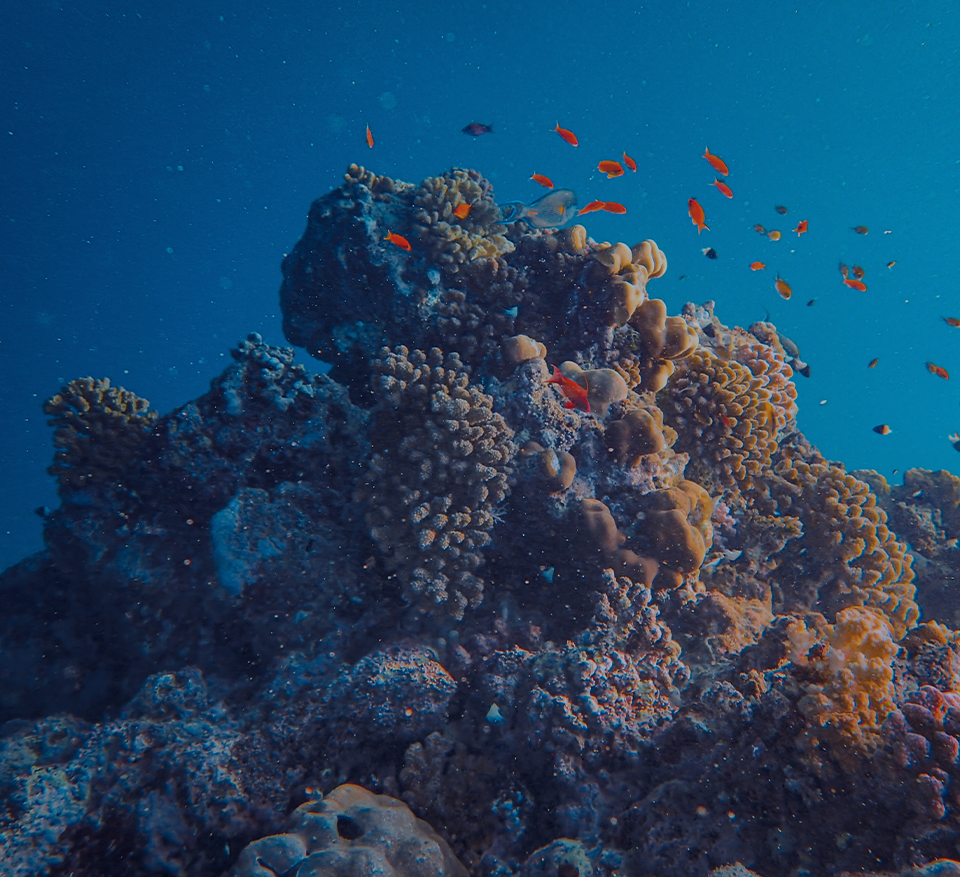
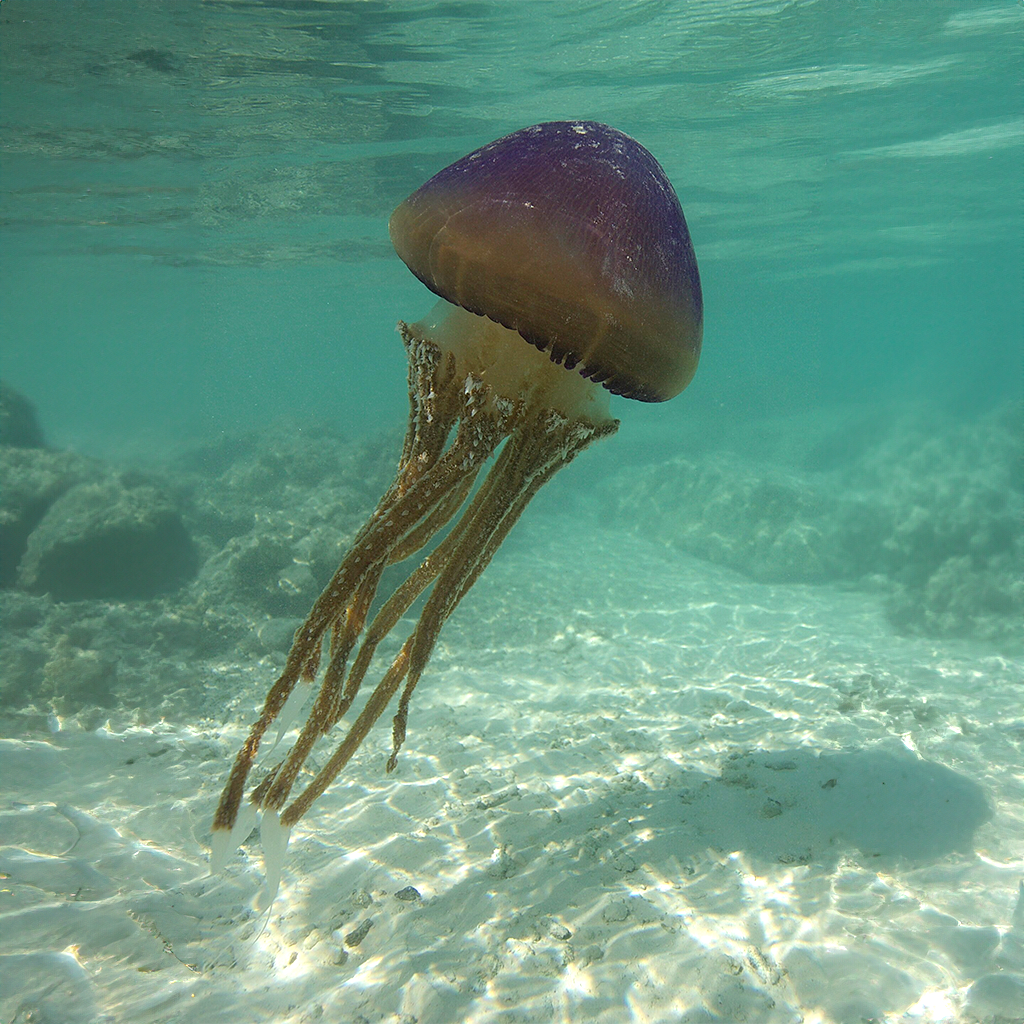
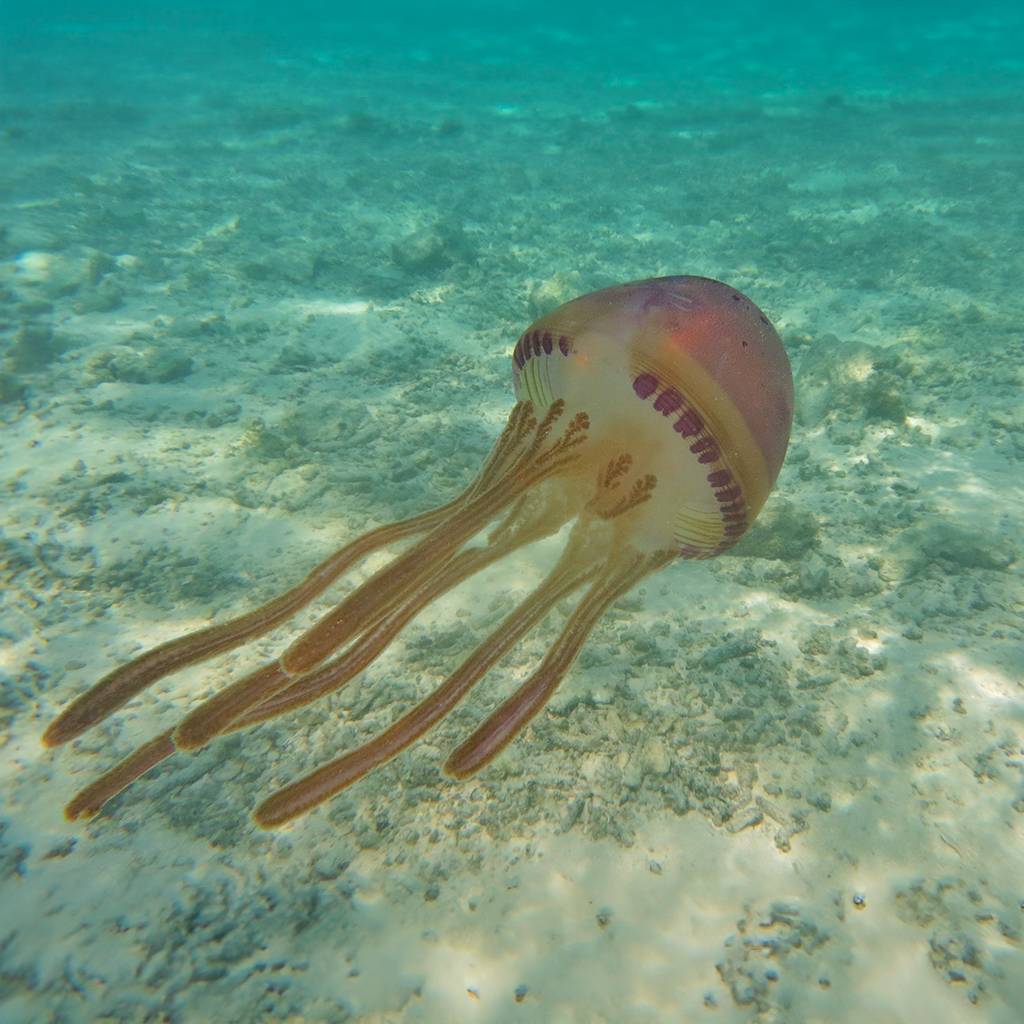
They inhabit tropical Indo-Pacific waters, including the Red Sea, where they are often found in open water, lagoons, and near reefs.
They prefer warm, calm waters, from the surface down to depths of about 20 meters.
They often appear in scattered groups, especially during seasons when plankton is more abundant.
AN ESTIMATED 2,000 TO 3,000 DIFFERENT JELLYFISH SPECIES EXIST AROUND THE WORLD.
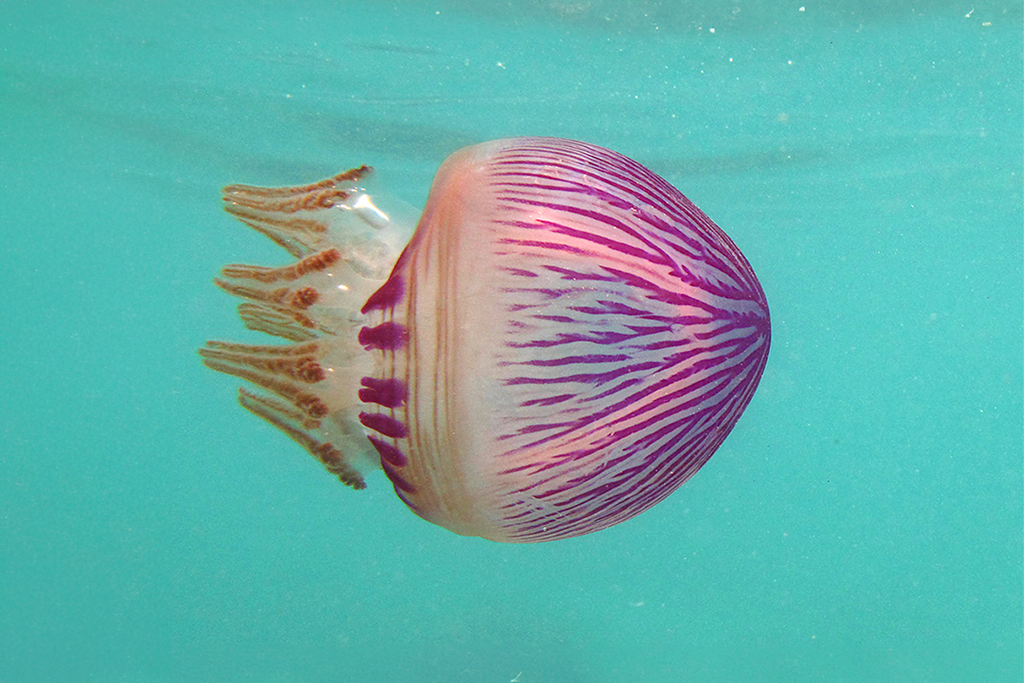
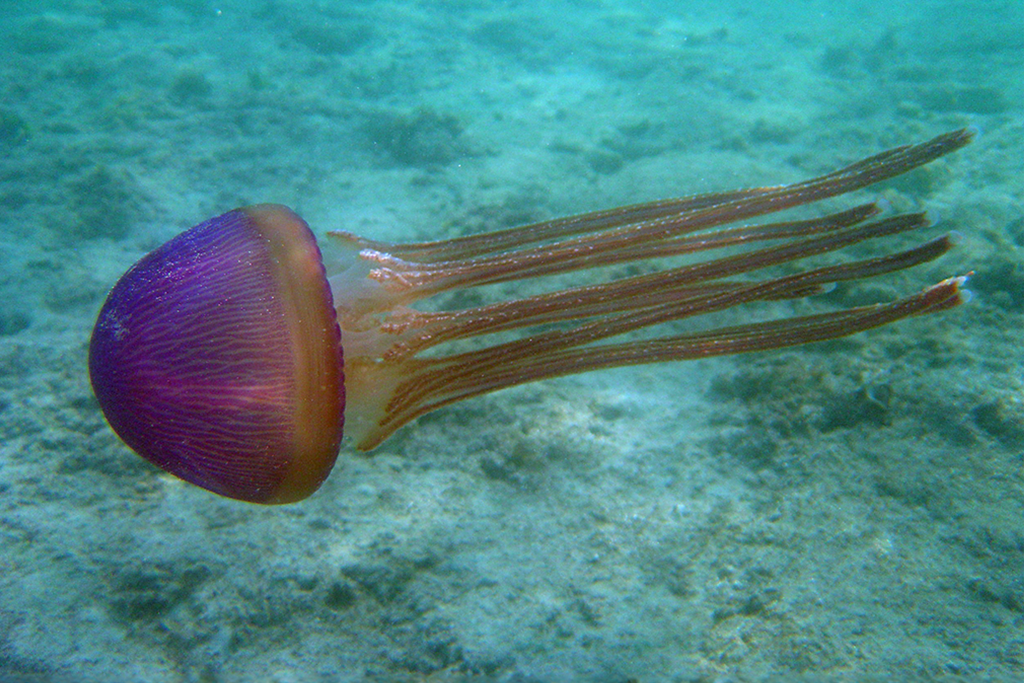
They can reach 30 to 40 centimeters across, sometimes more, with thick, branching tentacles.
Their color ranges from violet and pink to brown, depending on the light and the density of their pigment cells.
THEY HAVE NO BRAIN, BONES, OR HEART, yet they coordinate their movements through a simple nerve net.
They feed on plankton and small organisms captured with their stinging tentacles.
DID YOU KNOW?
•Jellyfish appeared in the oceans before dinosaurs, trees, and even land vertebrates.
• One species is known as "the immortal jellyfish.” When injured or stressed, it can reverse its life cycle and return to a juvenile stage through a process called cellular transdifferentiation (Turritopsis dohrnii).
• Jellyfish are approximately 95-98% water, which explains their translucent appearance.
• Some jellyfish produce their own light (through bioluminescence).
Jellyfish do not try to be more than they are. It has nothing to prove. It moves with the rhythm of the ocean, inhabits, and belongs. Perhaps that is why it reminds us of something we often forget: simply existing already has immense value.
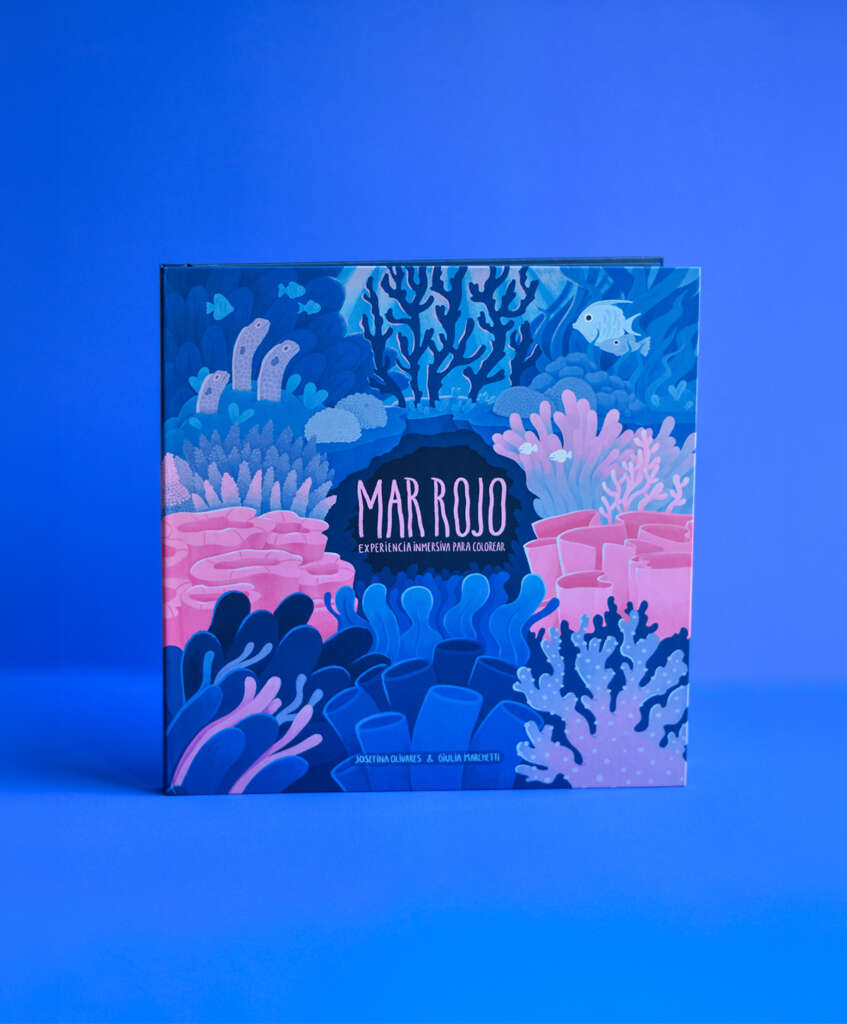
If this book gave you a moment to pause, paint, listen, and reconnect with yourself and the ocean, perhaps it can do the same for someone else.